

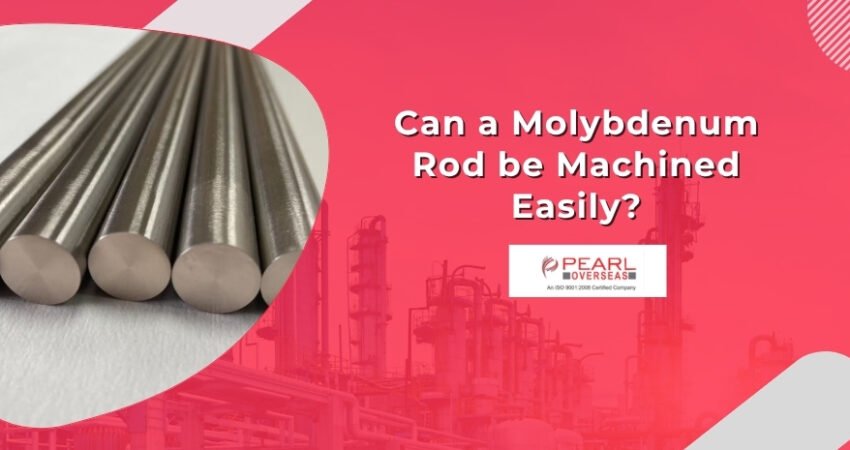
Understanding the machining characteristics of molybdenum
The general characteristics of molybdenum known to many people include a high melting point, high strength when subjected to high temperatures, and high wear and corrosion resistance. These characteristics give it a broad range of applications in industries like aerospace, construction, energy and heavy manufacturing. Nevertheless, when the manufacturers or contractors begin to think of using this metal, the very common question is can a molybdenum rod be machined easily?
Practically, the machining of molybdenum rods can be conducted, and very often it is conducted in factories, although it needs to be done using the correct methods and equipment. Molybdenum does not respond to a cutting, drilling and shaping process as other traditional metals such as mild steel and aluminium. The molybdenum machining process should take into consideration that the material is hard and brittle at room temperature and has high thermal conductivity. Molybdenum rods can be machined effectively and with high precision with appropriate machining parameters and appropriate equipment. The knowledge of these factors assists construction engineers, manufacturing heads and contractors to use appropriate fabrication techniques when molybdenum components are needed to complete important projects.
Molybdenum Rod Machining: What Makes It Challenging?
Although molybdenum may be machined, it is a metal that cannot be handled like normal metals. The difficulties are mostly due to the physical properties of the material.
The important machining factors are:
- High hardness: Molybdenum is stronger than many common metals, which increases tool wear during cutting.
- Brittleness at lower temperatures: The material may chip if improper cutting speeds or feeds are used.
- Heat resistance: While beneficial for performance, it can affect tool efficiency during prolonged machining operations.
For these reasons, effective machining of molybdenum rod requires careful control of cutting conditions and appropriate tools.
Molybdenum Machining Process: Common Techniques Used
The molybdenum machining process is usually in accordance with the traditional way of metalworking, with some modifications. Such precision machining operations are commonly utilized by the manufacturers to attain the right dimensions and finishes of the surface.
Such common machining methods are:
- Turning: It is used to roll molybdenum rods to the accurate diameter.
- Milling: The process is ideal for making slots and grooves as well as intricate profiles.
- Drilling: This is applied to make holes to be used in mechanically assembling or fastening.
- Grinding: used to provide a high surface finish and dimensional accuracy.
In a bid to enhance machining performance, it is quite common to have manufacturers operating at moderate cutting speeds and steady feed rates. Coolant or lubrication can also be used to limit the heat generated and increase the life of the tools.
Best Tools for Machining Molybdenum
Molybdenum machining is a critical process where the choice of the most appropriate tools will result in an efficient outcome. Normal tools used in cutting can be easily worn off when not suitable for cutting high-strength metals.
Recommended tools include:
- Turning and milling cutting tools made of carbide.
- Razing and finishing tools with diamond coating.
- Light-duty tools made of high-speed steel.
Other important tool considerations:
- There is less chance of chipping because of sharp cutting edges.
- The tool holders are rigid, which limits vibration during the machining process.
- Good geometry of the tool enhances the quality of the surface and the creation of the chips.
Molybdenum rod machining can be greatly enhanced by the manufacturers through adequate tooling.
Machining Molybdenum vs Tungsten
Another common metals comparison is between machining molybdenum vs tungsten. Both materials are of the refractory metal family and are similar materials regarding their high temperatures. There is, however, a significant difference in their machinability.
Key differences include:
Molybdenum
- Machinable easier than tungsten.
- Reduced hardness will enable superior cutting.
- Gives a machinable chip that is easier to work with.
Tungsten
- Extremely hard and brittle.
- Needs additional specialized tools and machining conditions.
- Increased tool life and reduced machining rates.
Due to these variations, molybdenum is frequently a rather convenient option for the manufacturer who needs both heat resistance and machinability.
Can Molybdenum Be Machined Easily in Industrial Applications?
Therefore, is molybdenum easy to machine in the real-life industrial setting? Yes, with the necessary preparation.
With the appropriate machining procedures, molybdenum rods can be made with a high level of precision and reliability. Some of the industries where molybdenum is machined include:
- Aerospace manufacturing.
- Construction of an industrial furnace.
- Manufacture of electronics and semiconductors.
- Production of power production equipment.
Molybdenum components present a balance between durability and machinability to construction leaders and engineers working on large industrial projects, which will help them support the long-term structural performance.
Conclusion
Finally, whether or not a molybdenum rod can be machined easily, given the techniques and tools applied during the fabrication process, is dependent on both of them to a considerable extent. Even though molybdenum is more resilient and heat-insensitive compared to most traditional metals, the new techniques used in machining means can be shaped, drilled, and finished to high precision. Learning the machining process of molybdenum, selecting the most preferable tools to machine molybdenum, and the distinction between machining molybdenum and machining tungsten are some of the things that assist the manufacturers to attain better results. In the case of construction experts, engineers, and industrial project managers, molybdenum rods are a good material to rely on when performance as well as machinability are needed.
FAQs
Q1. Can molybdenum rods be machined using standard CNC machines?
Yes. Molybdenum rod machining can be done in most modern CNC machines, provided appropriate cutting tools, cutting speeds, and cutting feeds are applied. Carbide is used, and the machining conditions are usually stable to guarantee good results.
Q2. What is the best tool material for machining molybdenum rods?
The carbide tools are widely regarded as the best tools to machine molybdenum as they have a high wear resistance, and cutting edges do not lose their sharpness during machining.
Q3. How does machining molybdenum compare with machining tungsten?
In a comparison between machining molybdenum and tungsten, molybdenum is usually more machinable since it is not brittle, and the chips cut during machining are more manageable.
Looking for high-quality materials or expert guidance on molybdenum rod machining for your industrial or construction project? Connect with our team today to find the right solutions for your requirements. Contact us to learn more or email us at export@pearlshims.com for professional assistance.