

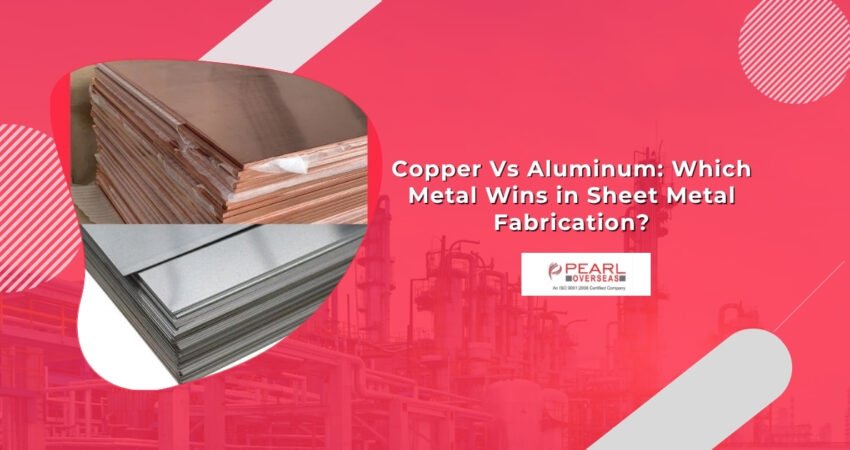
Copper Vs Aluminum: Which Metal Wins in Sheet Metal Fabrication?
Why Material Choice Makes or Breaks Your Fabrication Project?
In sheet metal fabrication, few decisions matter as much as choosing the right base material. Copper Vs Aluminum is one of the most common comparisons engineers, fabricators, and procurement teams face when planning a new project. Both metals are valued for their conductivity, workability, and corrosion resistance, but they react very differently to fabricators’ tools and perform differently in the field. Whether you’re designing electrical enclosures, HVAC components, busbars, or architectural panels, understanding how these two metals compare can save you time, money, and long-term maintenance headaches. In this guide, we’ll break down the physical properties, fabrication behavior, cost considerations, and real-world applications of both metals so you can choose the right option for your next project.
Copper Vs. Aluminum Sheet Metal: The Core Differences
Before diving into applications, it helps to understand the fundamental differences in how copper and aluminum behave as raw sheet stock.
Weight and Density: Aluminum is roughly one-third as heavy as copper for the same volume. This makes it the best option for applications where weight reduction matters, such as aircraft, buses, other vehicle panels, and large building facades.
Conductivity: Copper conducts electricity and heat much better than aluminum and greatly surpasses aluminum in a size-for-size comparison. That’s why copper is still used most often in high-performance electrical applications, despite the higher price tag and heavier weight.
Corrosion Resistance: Aluminum’s oxide coating forms naturally and prevents further corrosion, making it relatively easy to maintain in many outdoor and industrial applications. Copper is also highly corrosion-resistant but will form a visible patina over time, or some designers will prefer it for its decorative appeal.
Cost: Aluminum is generally more budget-friendly than copper, both in raw material cost and fabrication labor, since it’s easier to cut, form, and machine.
In a copper vs aluminum sheet metal comparison, the choice may depend on a balance of conductivity, durability, lightness, and cost.
Applications of Aluminum Sheets
Aluminum has found its way into many industries because of its versatility. Aluminum sheets are widely used in various applications, such as:
- Automotive and aerospace panels: lightweight body panels and structural components that improve fuel efficiency
- HVAC ductwork: lightweight, corrosion-resistant ducts that are easy to install and maintain
- Architectural cladding and roofing: weather-resistant exterior panels that require minimal upkeep
- Electronics enclosures: heat sinks and casings that take advantage of aluminum’s thermal characteristics without adding unnecessary mass
- Marine equipment: boat hulls and fittings that need corrosion resistance in wet environments
Because aluminum sheets are easy to cut, bend, and weld using standard fabrication equipment, they’re often the default choice for high-volume manufacturing runs where speed and cost efficiency matter most.
Applications of Copper Sheets
Copper’s unmatched conductivity and antimicrobial properties give it a distinct set of use cases. Common applications of copper sheets include:
- Electrical wiring and components: connectors, terminals, and conductive parts where efficiency matters
- Roofing and architectural accents: premium roofing material valued for its longevity and aging patina
- Plumbing systems: pipes and fittings that resist bacterial growth and long-term corrosion
- Heat exchangers and radiators: components that rely on rapid heat transfer
- Decorative and artisan work: custom fabrication for high-end interior and exterior design elements
Fabricators working with copper sheets need to account for the metal’s higher hardness and tendency to work-harden during bending, which often requires annealing between forming steps.
Copper vs. Aluminum in Busbar Applications
One of the most practical and frequently debated comparisons in electrical fabrication is Copper vs. Aluminum in busbar applications. Busbars distribute electrical power within switchgear, panel boards, and distribution systems, and the material choice directly affects performance and cost.
Copper busbars offer higher conductivity per cross-sectional area, meaning a smaller copper busbar can carry the same current as a larger aluminum one. This makes copper ideal for space-constrained installations. Copper also handles higher temperatures more reliably and has better mechanical strength, reducing the risk of loosening at connection points over time.
The other type is aluminum, which is considerably lighter and less expensive, making it attractive for large-scale installations where budget and structural loading are major concerns. Aluminum, however, must be made into larger cross-sections to carry the same current as copper and is more susceptible to oxidation at connections; without antioxidant treatment, it can become more resistant.
In the short run or when a project is on a budget, aluminum busbars may be appropriate. Copper is generally the material of choice for high-density, high-reliability applications such as data centers or an industrial plant, even though it is more expensive than other materials.
Conclusion
The choice is not about which metal is “better” for a given sheet metal fabrication project, but about selecting copper or aluminum to best support the project. We learned that aluminum performs well in applications where weight reduction, cost reduction, and ease of manufacturing are the primary concerns, such as HVAC systems, automotive panels, and building cladding. Copper, on the other hand, performs best where conductivity, strength, and durability matter most, such as in electrical wiring, plumbing, and high-density busbar systems. With considerations such as conductivity, weight, corrosion, and budget in mind, you can rest assured that you have chosen the optimum metal for your next project and your optimum metal fabrication partner.
FAQs
Q1. Is aluminum or copper better for outdoor sheet metal projects?
Aluminum is often preferred for outdoor architectural and roofing projects because its natural oxide layer resists corrosion with minimal maintenance, while copper develops a patina that some designers value aesthetically but that changes the material’s appearance over time.
Q2. Why is copper preferred over aluminum for electrical busbars in high-current applications?
Copper is preferred in high-current busbar applications because it offers greater conductivity per unit size, allowing for smaller, more compact busbars that generate less heat and maintain reliable connections under heavy electrical loads.
Q3. Can aluminum sheet metal be welded as easily as copper?
Aluminum is generally easier and faster to weld and form using standard fabrication equipment, while copper’s higher thermal conductivity and tendency to work-harden often require specialized techniques like annealing and TIG welding for clean, reliable joints.
Choosing the right metal is only half the battle; proper fabrication makes all the difference in performance and longevity. Need help executing your copper or aluminum sheet metal fabrication project? Contact our engineering team at export@pearlshims.com.