

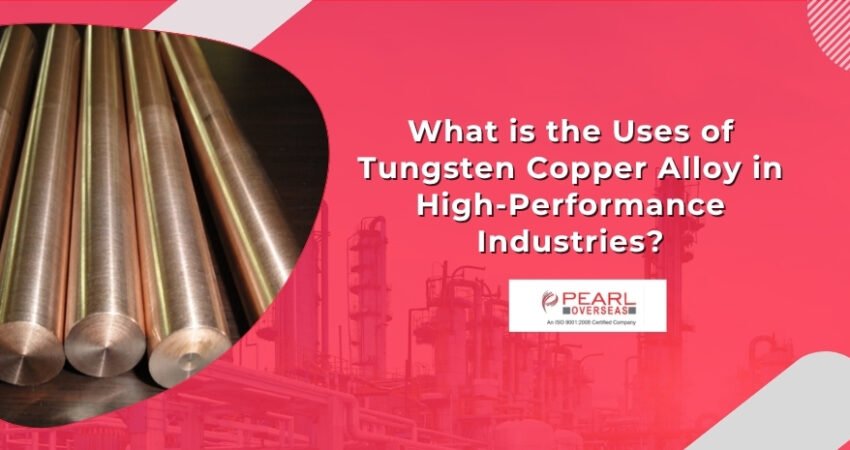
The Role of Tungsten-Copper Alloys Across Today’s Industries
The tungsten copper alloy, often abbreviated as W-Cu, is a powerhouse composite material engineered for the most demanding industrial environments. By combining the high melting point and strength of tungsten with the superior electrical and thermal conductivity of copper, this alloy delivers performance where other materials fail. From aerospace to heavy manufacturing, the uses of tungsten copper alloy are critical. Its unique blend of properties ensures reliability, precision, and safety in high-stress, high-temperature applications, making it an indispensable material for modern industry.
1. Unmatched Performance in High-Temperature Applications
One of the primary tungsten copper uses is in environments with extreme heat. Its remarkable ability to maintain structural integrity at high temperatures makes it invaluable for applications where thermal stability is non-negotiable.
Key properties for high-temperature use include:
- High Thermal Stability: Resists deformation and softening even when exposed to intense heat.
- Excellent Heat Dissipation: Effectively draws heat away from critical components, preventing overheating and failure.
- Consistent Conductivity: Maintains stable electrical and thermal conductivity at elevated temperatures.
- Wear Resistance: Minimizes wear and tear, significantly extending the operational life of equipment.
Because of these traits, the W-Cu alloy is essential in welding electrodes, power generation components, and furnace parts where performance under thermal stress is paramount.
2. Superior Electrical and Thermal Conductivity
The high copper content gives tungsten copper alloy excellent electrical and thermal conductivity, making it a critical material for high-power electrical systems. It ensures reliable performance even under high electrical loads and provides a stable pathway for current and heat.
Common applications leveraging its conductivity include:
- Electrical Contacts and Electrodes: Its high resistance to arc erosion makes it perfect for circuit breakers, contactors, and switches.
- Heat Sinks: It is widely used in electronic devices and power modules to dissipate heat efficiently and protect sensitive components.
- Power Distribution Systems: Ensures longevity and reliability in high-current conductors and terminals.
- Resistance Welding: Used for welding electrodes in the automotive and manufacturing sectors due to its durability and conductivity.
These tungsten copper properties make it a trusted solution where electrical and thermal management is crucial for safety and efficiency.
3. Critical Applications in Aerospace and Defense
The aerospace and defense sectors demand materials that can withstand extreme conditions without fail. Tungsten copper alloy meets these stringent requirements with its exceptional mechanical strength, density, and resistance to heat and vibration.
Key aerospace and defense applications include:
- Rocket Nozzle Inserts: Withstands the ultra-high temperatures and erosive forces of rocket exhaust.
- High-Temperature Shielding: Protects critical components from intense heat during atmospheric re-entry or engine operation.
- Aircraft Electrical Systems: Used for high-performance electrical contacts that require reliability under stress.
- Vibration Damping Components: Its high density helps absorb shock and vibration, protecting sensitive equipment.
Its stable performance makes it a go-to material for mission-critical operations where material failure is not an option.
4. The Go-To Material for EDM (Electrical Discharge Machining) Electrodes
In the world of precision manufacturing, Electrical Discharge Machining (EDM) requires electrodes that are highly resistant to spark erosion. Tungsten copper alloy is a leading material for EDM electrodes due to its unique ability to withstand the intense, localized heat of the process.
Benefits of using W-Cu for EDM electrodes:
- High Wear Resistance: Ensures the electrode maintains its shape for precise and accurate machining.
- Excellent Electrical Conductivity: Allows for efficient and rapid material removal.
- Fine Surface Finish: Helps create smooth, high-quality finishes on the workpiece.
- Durability: Enables the machining of hard metals and complex shapes in the tool and die industry.
These characteristics make it the ideal choice for producing high-precision molds, dies, and intricate industrial components.
Key Properties and Advantages of Tungsten-Copper Alloy
Industries prefer W-Cu alloy because its composite nature offers a combination of benefits that are difficult to find in a single metal:
- High Melting Point: Inherited from tungsten, allowing it to perform in extreme temperatures.
- Superior Wear and Arc Resistance: Provides durability in electrical and high-contact applications.
- Excellent Conductivity: Inherited from copper, ensuring efficient transfer of heat and electricity.
- High Density and Mechanical Strength: Offers structural integrity and vibration-damping capabilities.
- Long Operational Lifespan: Reduces maintenance costs and downtime due to its robust nature.
Conclusion
As we’ve seen, the uses of tungsten copper alloy span a wide range of high-performance industries. From managing extreme heat in aerospace to ensuring precision in EDM machining and reliability in electrical systems, its unique combination of properties makes it an unparalleled engineered material. The blend of tungsten’s strength and heat resistance with copper’s conductivity provides a solution that enhances performance, safety, and longevity in the most challenging applications.
FAQs
Q1. What are the main applications for tungsten copper alloy?
The primary tungsten copper applications are in high-temperature environments and high-power electrical systems. This includes heat sinks, EDM electrodes, rocket nozzles, electrical contacts, and resistance welding components.
Q2. Why is W-Cu alloy good for EDM machining?
Its excellent resistance to arc erosion, high conductivity, and ability to maintain its shape under intense heat make it the ideal material for EDM electrodes, ensuring precision and a long tool life.
Q3. Is tungsten copper alloy used in the aerospace industry?
Yes, its high strength, density, and extreme heat resistance make it essential for aerospace parts like rocket nozzle inserts, heat shields, and critical electrical contacts where reliability is paramount.
Ready to leverage the power of a superior alloy for your project? Get premium tungsten-copper alloy solutions that guarantee durability, precision, and unmatched performance. Contact us today or email us at export@pearlshims.com to discuss your requirements.