

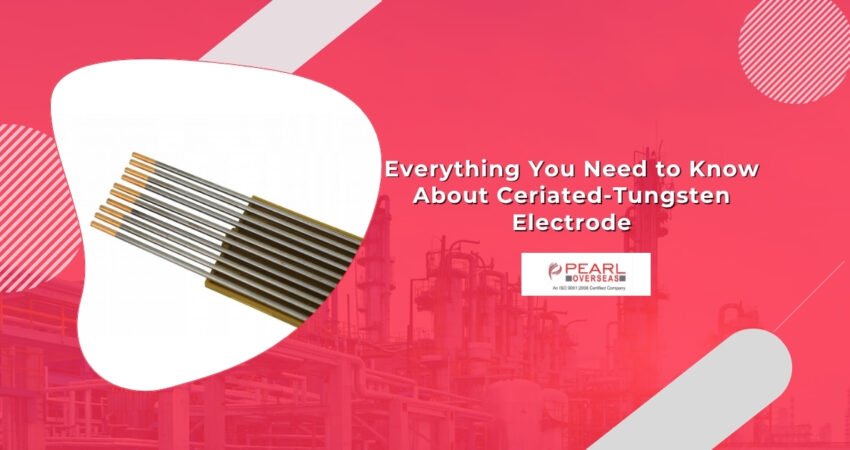
Everything You Need to Know About Ceriated Tungsten Electrode
Why Ceriated-Tungsten Has Earned a Place in Modern TIG Welding?
Walk through most any TIG welding shop today and you will see a grey-tipped electrode on the bench. It is a ceriated-tungsten electrode, and its popularity continues to rise as workshops turn away from the older, slightly radioactive electrodes. It easily lights the arc, maintains low current stability and is less consumed than plain tungsten. That combination has a positive effect on the quality of the weld and cleanliness for anyone welding thin stainless tubing, small fabrications, or any delicate orbital joints. This guide describes the materials of the electrodes, their most suitable applications, their differences from other electrodes and how to prepare them correctly. It is written for welding operators, fabricators, and industry professionals who handle tungsten daily, and for anyone curious about the future prospects for tungsten metals.
What Is a Ceriated-Tungsten Electrode?
A ceriated-tungsten electrode is an electrode that is non-consumable and composed of tungsten mixed with approximately 2% cerium oxide or ceria. According to AWS A5.12, it falls in the grade EWCe-2, where the cerium oxide is 1.8-2.2% and the remainder is primarily tungsten. The standard is based on the international ISO 6848 system, and the classification is the same in most markets.
Tungsten is a material that melts at approximately 3,422°C, so it can carry the welding arc without burning away. The same property is relevant when acquiring wire or rod stock, what this tungsten W2 wire spools guide explains. The cerium oxide, spread through the rod, makes it easier for electrons to leave the tip. In reality this translates to easier starts and a calmer ride.
Some confusion exists with colors. Current 2% ceriated-tungsten is greyish, and older tungsten was stored in the orange color. If there is any doubt, use the printed classification on the electrode, rather than relying on the color.
Key Benefits of 2% Ceriated-Tungsten
The first thing that operators typically notice when they switch to this TIG welding tungsten electrode:
- Easy arc starts: Reliable ignition and re-ignition, even at low amperage.
- Stable arc: Runs well on DC and also works on AC.
- Low burn-off: It erodes more slowly than pure tungsten, so the tip lasts longer.
- Fewer regrinds: A tip that keeps its shape saves time on short, repeated welds.
- Non-radioactive: A safer alternative to thoriated electrodes.
Where Ceriated Electrodes Perform Best in TIG Welding
Choosing a TIG welding tungsten electrode starts with the current range. Ceriated electrodes emit light at small to medium amperage. Common applications are thin sheet, orbital tube and pipe welding, small precision parts, and short welds with frequent restarts. They fit to carbon steel, stainless steel, nickel alloys, titanium and copper alloys.
There is a time limit, however. At high amps, cerium will move rapidly to the hot tip, thereby diminishing its benefit. For heavy and high current weld, many welders will upgrade to lanthanated electrodes.
Ceriated vs Thoriated Tungsten: Which Should You Pick?
The ceriated vs thoriated tungsten debate is typically about safety and the range of current. Thoriated electrodes (EWTh-2, red) present with thorium oxide, which is slightly radioactive, and require careful dust control. Ceriated types provide similar performance in DC steel and stainless applications, but without that hazard.
| Type | AWS class | Color | Oxide additive | Best suited for |
| Ceriated | EWCe-2 | Grey | ~2% cerium oxide | Low-amperage AC and DC |
| Thoriated | EWTh-2 | Red | ~2% thorium oxide | DC welding of steel and stainless |
| Lanthanated | EWLa-1.5 | Gold | ~1.5% lanthanum oxide | AC and DC, including heavier work |
Cerium oxide is not radioactive, but dust is still dust. Use local extraction and a respirator when grinding any tungsten. To learn more about the safety aspect, check out Are Tungsten Alloy Metals Toxic?
How to Sharpen a Tungsten Electrode for Clean Arcs?
Preparation is as important as the TIG welding tungsten electrode you select. A few habits make a difference one can see:
- Grind lengthwise: Continue the grinding marks towards the tip, keeping the arc straight.
- Use a dedicated wheel: A wheel used only for tungsten prevents contamination.
- Set the taper: approximately 2 to 2 ½ times diameter for DC welding.
- Leave a tiny flat: A needle-sharp point can melt back or wander.
Common Mistakes to Avoid
Do not immerse the electrode into the weld pool as contamination detracts from the tip and the weld. Continue to provide a shielding gas after arc extinguishment to allow the hot tip to cool in an inert gas environment rather than in an oxidizing environment. Lastly, match up the diameter to the amperage, not the closest piece you can find.
Conclusion
A ceriated tungsten electrode is a common, non-radioactive electrode for the TIG welder operating in low to moderate current. We discussed the meaning of EWCe-2, primary benefits of 2% ceriated tungsten, where it is most effective, the comparative advantages of ceriated and thoriated tungsten, and how to sharpen it properly. Select it for thin materials, orbital work or when frequent restarts are required, switch to another type when amperage increases. The rest will come with good preparation and the right diameter.
FAQs
Q1. Can I use a 2% ceriated tungsten electrode for aluminum welding?
Yes, thin aluminum at a lower amperage, it’s AC. Many welders use zirconiated or lanthanated electrodes with thicker aluminum.
Q2. Is a ceriated tungsten electrode safer than a thoriated one?
Yes. The electrodes used are non-radioactive, as opposed to thoriated electrodes. Grinding dust control should still be performed using extraction and a respirator.
Q3. What color is a ceriated tungsten electrode?
Grey adhering to the current AWS standard. The older stock might be orange and when in doubt, refer to the print classification (EWCe-2).
Looking for tungsten, molybdenum, or other high-temperature alloy products for your industrial application? Contact Molybdenum Products through the contact page or write to export@pearlshims.com.